Titles are funny things. For me—beyond materiality and form—they are an entry point to an object. Titles can invite a viewer to see something differently or provoke one’s imagination to linger longer.
I’m not sure if it is the spring season, or reading Joy Harjo’s American Sunrise, or my connection to shiny beaded objects, but themes of light run through the Packer family blanket story column. For a while, I was positive that the sculpture should be titled Skywalker/Skyscraper (Ladder to Light). But as I was re-reading the blanket stories I found myself laughing at the story about beloved blankies “Dan” and “Steve.”
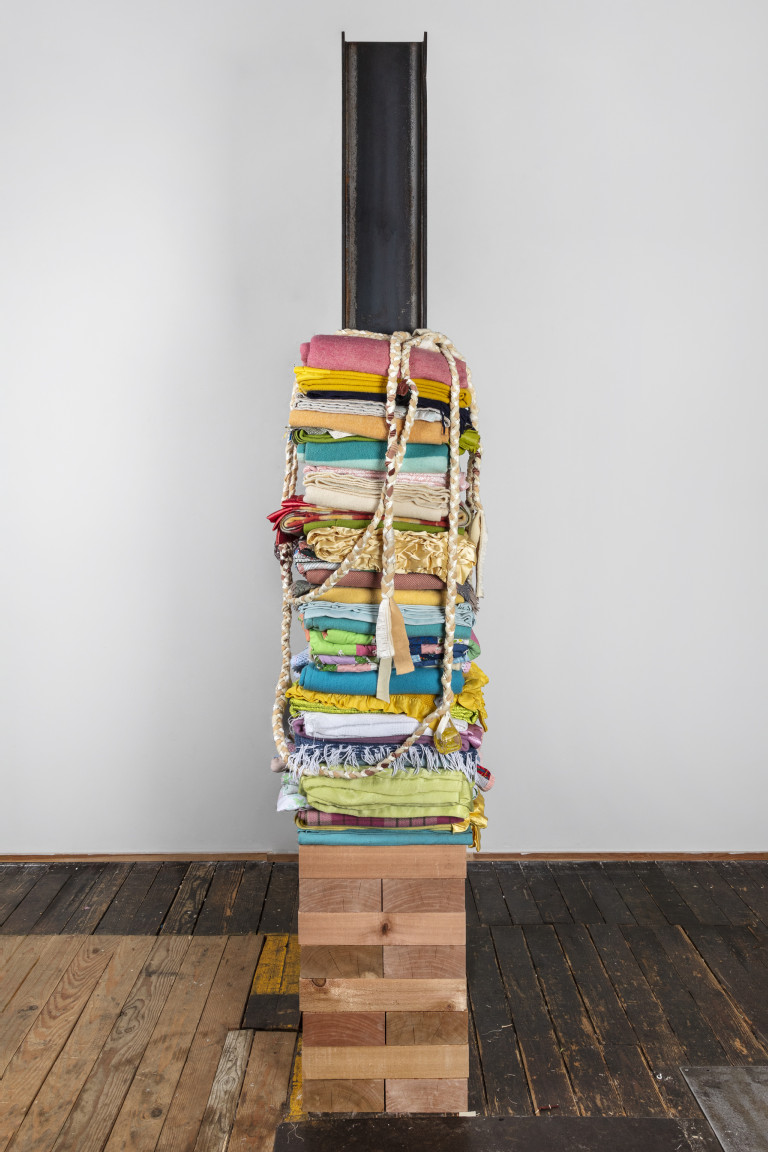
It got me thinking about the act of naming inanimate objects as an expression of connection and relationship. It also makes me think about objects like security blankets that are remembered in stories, but no longer present. I’ve long been drawn to the notion that a blanket can be a touchstone for memories and it doesn’t have to be the actual blanket that sparks the remembrance. For this reason the title Skywalker/Skyscraper (Dan and Steve), alternatively known as (Ladder to Light), makes sense to me. It is a title personal to Julia and Isabella and has a connection to Packer family lore. It is a humorous reference. It also provokes questions: Who are Dan and Steve? Skywalkers? Skyscrapers? Who are the Dans and Steves in our lives?
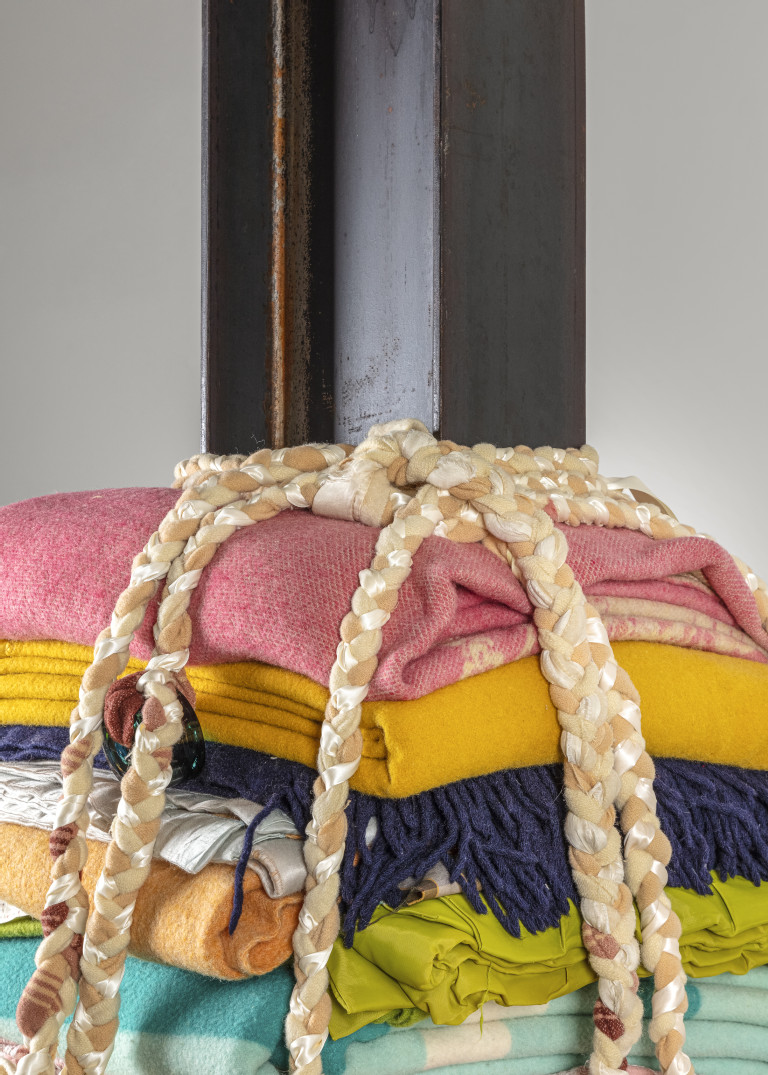
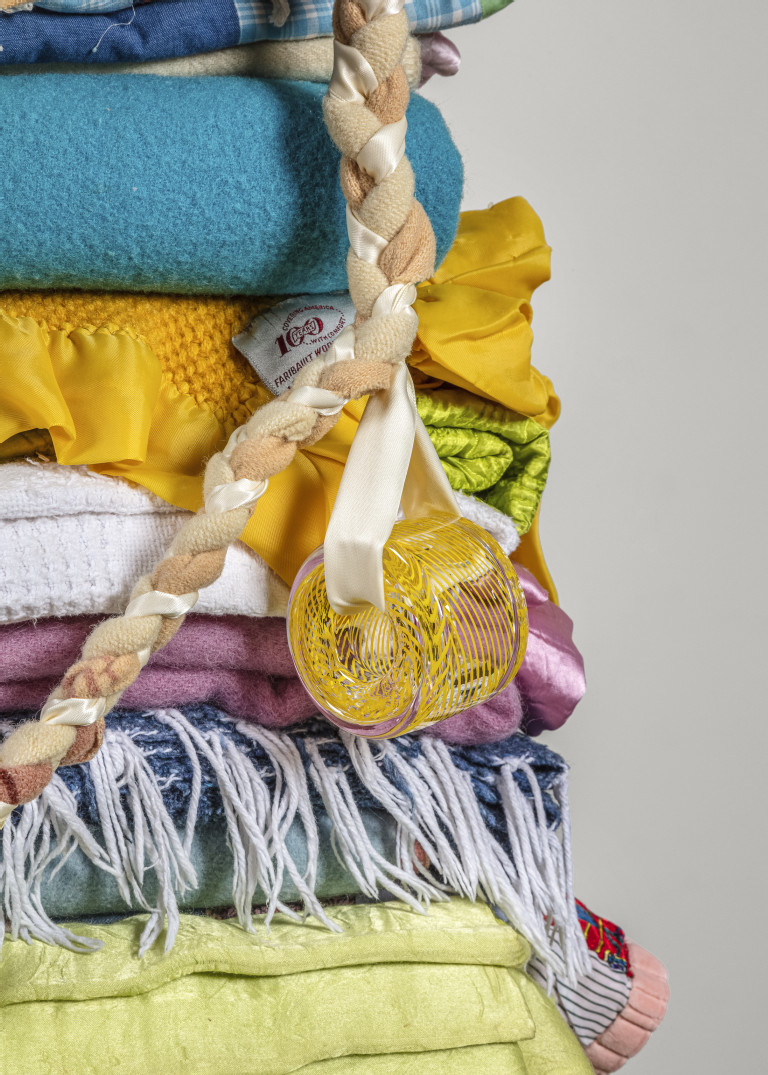
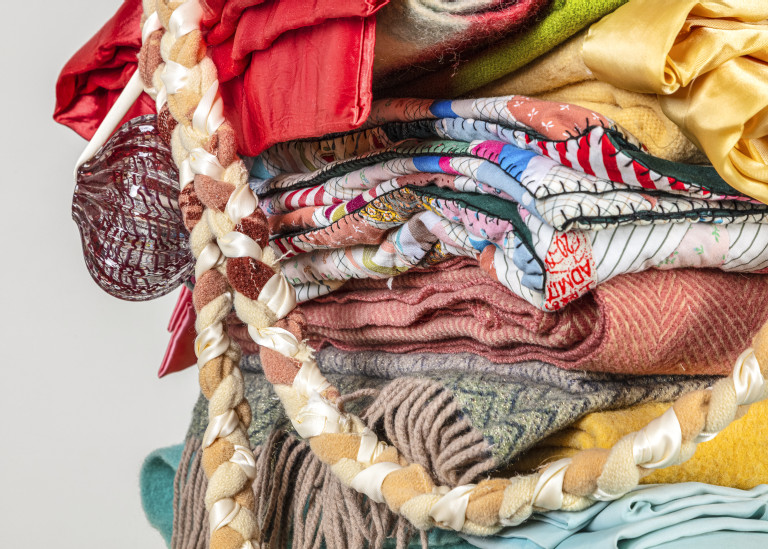
In addition to the Packer family blankets, I have intermingled blankets from my own library and archive. The stories of the blankets used in this column all reference family connections and the strong emotional attachments we form to these cherished pieces of cloth. Blankets can be protective talismans for childhood and represent loving bonds between family members, strengthening relationships in our present but also calling back and forth to ancestors and future generations.
The cedar base of the column similarly invokes associations with family hope chests and generational memory. This material, sacred to the Indigenous peoples of the Pacific Northwest where I live and grew up, fills me with nostalgia and connects earth to sky via the scent and feel of towering conifers. Likewise the steel I-beam references my “skywalking” Haudenosaunee ancestors who walked across the steel skeletons of the skyscrapers high above New York City. As one of the most recycled materials in the world, steel carries the legacy of past generations forward into the present and future, similar to how blankets are sites of ongoing stories and symbols of our connectedness.
In this column, I was drawn to incorporate beads and braiding, both of which hold a place in my larger practice. For the last few years, I have been working with vintage Italian beads, which were introduced to Indigenous communities through trade with European settlers. It’s interesting to me that Westerners consider Native American beadwork “traditional,” because the techniques and applications were actually radical for the time, and a direct result of colonization. In reality, Indigenous beadwork as we know it today represents expressive innovation. It is also the result of forced relocation and life on the reservation, where people worked with beads as a way to pass time.
The large hand-blown glass beads in this piece evoke this history and gave me the opportunity to meditate on beads further. Here, the beads are reminiscent of amulets intended to give strength and safeguard. Connecting to the Florida beaches by way of their origin material, sand, the glass beads draw in the Southeastern light, amplifying the luminosity of the space. By lassoing the braids at the top of the column and allowing them to be weighed down by glass beads, I draw a relationship between Sky World and Turtle Island. These braids droop, loop, and drape in weblike reference to dream catcher forms.
The four materials used in this column–steel, cedar, blankets, and glass beads– seem radically different and yet all connect through their invocation of shelter, protection, and home. These are the qualities I want to pass on to the Packer family through Skywalker/Skyscraper (Dan and Steve).